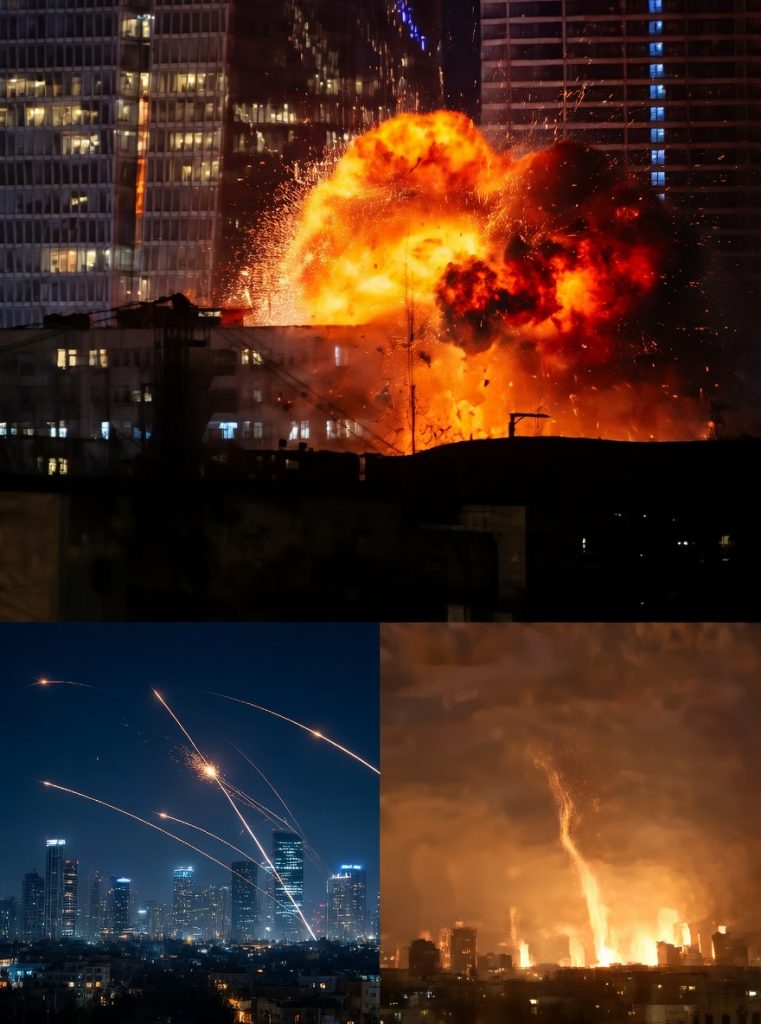
You sit at your kitchen table with your morning coffee when the news alert flashes across your phone, and the words send a quiet chill through the room. Israel has just been placed on heightened alert in 2026 — the kind of security situation that can turn an ordinary day into something uncertain, something heavier. Even from thousands of miles away, events like this have a way of reaching into your daily life, raising questions that go far beyond headlines.
At first glance, it may seem like a distant geopolitical issue, confined to a specific region. But history has shown that when tensions rise in strategically important areas like the Middle East, the ripple effects can travel quickly through global markets, energy supplies, and international stability. For many families, especially those thinking about retirement savings or the future of their grandchildren, the concern becomes deeply personal.
Israel’s security posture often reflects broader regional dynamics. Heightened alert can be triggered by a range of developments — increased military tensions, intelligence warnings, cyber threats, or shifting alliances. While officials may not always disclose every detail, the implication is clear: there is a perceived risk that requires readiness. And when one of the world’s most closely watched regions enters such a phase, investors and governments around the globe take notice.
Financial markets are particularly sensitive to uncertainty. Even the suggestion of escalation can lead to fluctuations in oil prices, stock indices, and currency values. Energy markets, in particular, tend to react quickly because of the Middle East’s role in global oil and gas supply. A sudden spike in oil prices can increase transportation and production costs worldwide, which can then feed into inflation. For retirees or those approaching retirement, inflation is more than just an abstract concept — it directly impacts purchasing power, savings longevity, and day-to-day living expenses.
If you’ve spent years building a retirement fund, moments like this can feel unsettling. Market volatility may cause temporary dips in portfolio values, especially if investments are heavily tied to equities or international funds. However, it’s important to remember that markets have historically experienced cycles of ups and downs in response to geopolitical events. While short-term reactions can be sharp, long-term trends often stabilize as more information becomes available and tensions either resolve or become part of a new normal.
For younger families, the concern often shifts toward long-term stability. What kind of world will your grandchildren grow up in? Will economic uncertainty today shape their opportunities tomorrow? These questions don’t have simple answers, but they highlight the interconnectedness of global events and personal futures.
One practical takeaway during periods of heightened global tension is the importance of diversification. A well-balanced portfolio that includes a mix of asset classes — such as stocks, bonds, and possibly commodities — can help cushion against sudden market swings. Diversification doesn’t eliminate risk, but it can reduce the impact of any single event on your overall financial health.
Another key factor is maintaining a long-term perspective. It’s easy to feel the urge to react quickly when headlines are alarming, but impulsive decisions can sometimes do more harm than good. Financial experts often advise staying the course, reviewing your investment strategy periodically, and making adjustments based on your individual goals rather than short-term news cycles.
Emergency preparedness is also worth considering, not in a dramatic sense, but as a matter of practical planning. Ensuring you have accessible savings, manageable debt levels, and a clear understanding of your financial commitments can provide peace of mind regardless of global developments. These fundamentals remain valuable whether the news is calm or concerning.
It’s also helpful to stay informed through reliable sources. In an age where information spreads rapidly — and sometimes inaccurately — distinguishing between verified updates and speculation is crucial. Misinformation can amplify fear and lead to unnecessary stress or poor decision-making. Taking a measured approach to news consumption can help you stay grounded.
Beyond finances, moments like this often prompt reflection on broader values — security, stability, and the kind of legacy you hope to leave behind. While geopolitical tensions may be beyond individual control, the choices you make about saving, investing, and planning can still shape your family’s future in meaningful ways.
As the situation develops, it’s likely that analysts, governments, and financial institutions will continue to assess the potential impact. Some outcomes may be temporary, while others could influence longer-term trends. What remains constant is the importance of resilience — both in global systems and in personal planning.
So as you finish your coffee and set your phone down, the headline may still linger in your mind. But alongside it, there can also be a sense of perspective. The world has faced moments of uncertainty before, and while each situation is unique, the principles of careful planning, informed decision-making, and steady focus on long-term goals remain as relevant as ever.
In times like these, the question is not just what is happening in the world, but how you respond to it — calmly, thoughtfully, and with an eye toward protecting not only your retirement savings, but also the future you hope to help build for the next generation.
