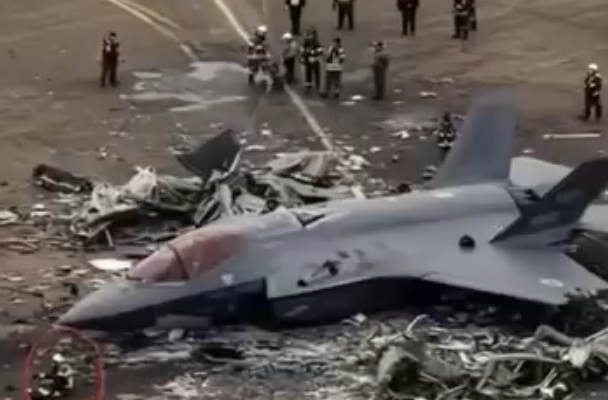
The loss of two Navy aviators in the crash of an EA-18G Growler near Mount Rainier has left the military aviation community grieving and searching for answers. What began as a routine training mission ended in tragedy when the advanced electronic warfare aircraft went down in rugged mountainous terrain, claiming the lives of two highly respected officers whose careers represented dedication, professionalism, and service.
The U.S. Navy later identified the aviators as Lyndsay P. Evans and Serena N. Wileman. Both women were assigned to Electronic Attack Squadron 130, widely known as the “Zappers,” stationed at Naval Air Station Whidbey Island.
Their deaths have deeply affected fellow service members, military families, and aviation communities across the country.
The crash occurred during what officials described as a routine training operation near Mount Rainier, one of the most challenging geographic environments in the Pacific Northwest. The heavily forested terrain east of the mountain includes steep slopes, rapidly changing weather conditions, and limited accessibility—factors that complicated both search efforts and later recovery operations.
The wreckage was eventually located at roughly 6,000 feet elevation in dense forest terrain. Recovery crews faced extremely difficult conditions while attempting to access the crash site safely. After initial hopes of rescue faded, the Navy confirmed both aviators had died in the accident, shifting operations from search-and-rescue to recovery and investigation.
As with any military aviation accident, federal investigators and Navy officials are now working to determine exactly what happened.
Modern military aircraft like the Boeing EA-18G Growler are among the most technologically advanced aircraft in the world. Derived from the F/A-18 Super Hornet platform, the Growler is specifically designed for electronic warfare missions, including radar jamming, electronic attack operations, and protection of allied aircraft during combat scenarios.
These jets are operated by highly trained crews and undergo extensive maintenance and safety procedures.
Yet military aviation remains inherently dangerous.
Even with advanced systems, rigorous training, and strict operational standards, aviation accidents can still occur because of the extreme environments, speeds, and mission demands involved. Investigators will likely examine multiple factors, including weather conditions, terrain, aircraft systems, pilot communications, flight data, maintenance records, and operational circumstances leading up to the crash.
In aviation investigations, conclusions often take months to determine.
Authorities typically avoid speculation early in the process because complex accidents rarely result from a single cause alone. Instead, investigators carefully reconstruct timelines and analyze evidence piece by piece before issuing formal findings.
Beyond the technical investigation, however, the emotional impact of the tragedy remains enormous.
Lt. Cmdr. Evans was especially well known within naval aviation circles after participating in the historic all-female flyover during Super Bowl LVII in 2023. That moment symbolized five decades of women serving in naval aviation and represented a milestone for many women pursuing military aviation careers.
Her participation in that event made her a visible figure of inspiration for younger generations considering service in aviation and the armed forces.
Lt. Wileman also built a respected military career after receiving her commission in 2018 and later joining the Zappers squadron. Reports noted that she earned several honors during her service, including the Navy Unit Commendation Medal and Combat Action Ribbon, reflecting operational excellence and dedication to duty.
For fellow service members, losses like this are deeply personal.
Military squadrons function not only as professional units but also as close-knit communities built around trust, shared risk, and intense teamwork. Aviators train together, deploy together, and rely on each other in environments where mistakes or emergencies can become fatal within seconds.
When accidents occur, the grief spreads throughout entire commands and aviation communities.
Commanding officer Timothy Warburton acknowledged this emotional reality in a statement expressing sorrow over the deaths of two “cherished Zappers.” His comments reflected a common reality inside military organizations after fatal accidents: while investigations proceed, immediate focus shifts toward supporting grieving families, squadron members, and fellow sailors emotionally affected by the loss.
Military aviation carries a unique psychological burden because service members understand the risks long before tragedies occur.
Pilots and flight officers willingly enter professions involving extraordinary responsibility and danger. Training missions alone can involve high speeds, difficult terrain, night operations, electronic warfare systems, and rapidly changing weather conditions. Even routine flights demand precision, concentration, and constant situational awareness.
Yet despite those dangers, aviators continue serving because of commitment to mission, country, and fellow service members.
The deaths of Evans and Wileman also highlight the continuing evolution of women’s roles in military aviation. Decades ago, opportunities for women in combat aviation were far more limited. Today, women serve as fighter pilots, helicopter pilots, naval aviators, commanders, and mission specialists across every branch of the military.
Their achievements helped reshape military aviation culture over generations.
That progress makes losses like this resonate even more emotionally for many within the armed forces community.
Meanwhile, the rugged location of the crash near Mount Rainier underscores another difficult reality of aviation operations in mountainous environments. Terrain can create rapidly shifting weather systems, reduced visibility, dangerous wind conditions, and limited emergency access. Even experienced crews flying advanced aircraft must constantly adapt to environmental challenges.
Recovery efforts in such locations can become dangerous operations themselves.
Search crews, recovery personnel, and investigators often work under severe conditions to retrieve wreckage and recover remains while preserving evidence necessary for accident analysis.
For families of fallen aviators, however, the investigation process unfolds alongside overwhelming grief.
Behind military titles and aviation accomplishments were daughters, friends, colleagues, mentors, and loved ones whose absence now leaves painful silence behind. Families must cope not only with sudden loss, but also with the public nature of military tragedies that attract national attention.
The broader military community now joins them in mourning.
As investigations continue, many questions remain unanswered about what caused the Growler to go down during what should have been a routine mission. But regardless of the eventual findings, the loss of two skilled aviators has already left a permanent mark on the squadron, the Navy, and those who knew them personally.
Their service, dedication, and sacrifice will continue to be remembered not only through official honors or military records—
but through the lives they touched inside and beyond the cockpit.